Clip-In Extensions: The Complete Beginner's Guide
Clip-in extensions are the gateway product of the hair world: no salon appointment, no adhesive, no commitment beyond an evening. A set of seven to nine wefts with pressure clips goes in at home in ten minutes and comes out before bed. For anyone curious about length or volume but unwilling to sign up for months of maintenance, clip-ins are the rational first purchase — provided you buy the right set and learn three basic techniques.
What a set contains and what it should weigh
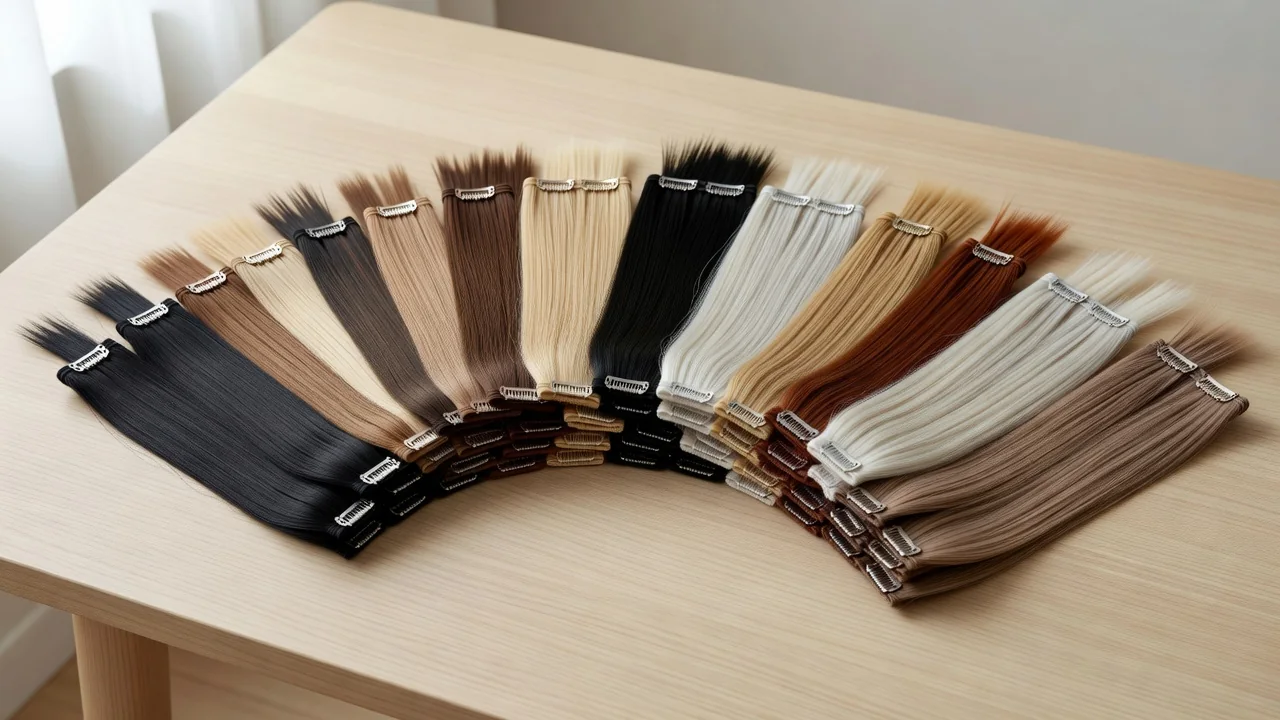
A standard full set runs from a 4-clip weft for the back of the head down to single-clip pieces for the sides. Weight is the number that matters: 70–90 grams thickens fine hair without much length, 120–160 grams gives a visible transformation on medium hair, and 200+ gram sets exist for genuinely thick natural hair that would otherwise swallow the extensions.
Buy Remy human hair, full stop. Synthetic clip-ins cost a third as much but cannot be curled or flat-ironed, shine with a plastic gloss under restaurant lighting, and tangle at the nape within a few wears. Non-Remy human hair is the middle trap: real hair, stripped cuticles, silicone coating that washes away by the fifth shampoo.
Putting them in: the ten-minute routine
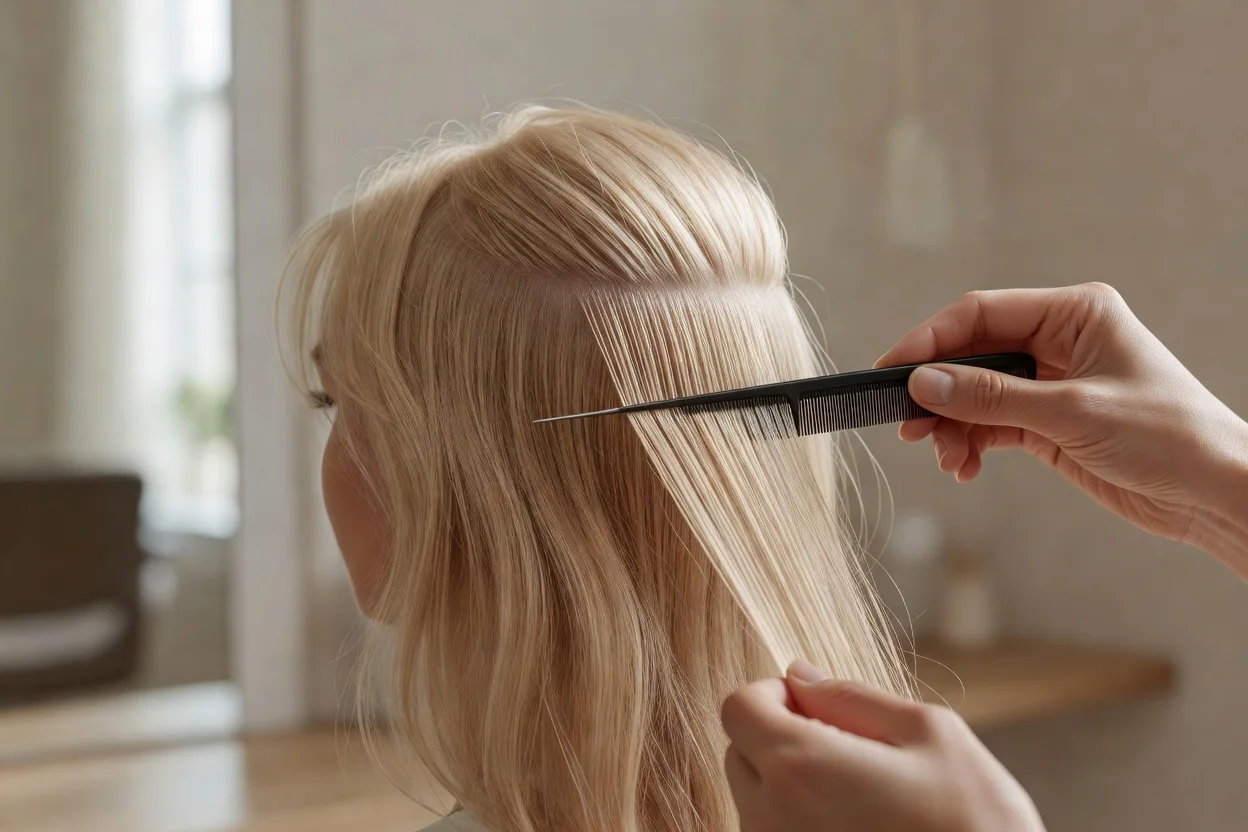
Work on dry, day-old hair — freshly washed hair is too slippery for clips to grip. Section horizontally with a tail comb, starting at the nape about 3 cm above the hairline. Backcomb the roots of the section lightly, mist with a touch of hairspray, and snap the clips shut on the teased base. Work upward: widest wefts at the back, narrower ones at the sides, single clips to fill gaps around the temples.
- Leave a solid curtain of natural hair on top — the last weft should sit at least 3 cm below your parting;
- Never sleep in clip-ins: the clips pivot overnight and pull at roots;
- Blend the join with a curling iron or straightener run over natural hair and extensions together;
- Thin hair grips better with silicone-lined clips or a dime-sized anchor braid under each weft.
Choosing length without regret
Length charts on shops are measured straight; on the head, waves and layers eat 3–5 cm. If you want the hair to reach your shoulder blades, buy 50 cm, not 45. Beyond 60 cm, daily practicality drops sharply — longer sets tangle faster, weigh more, and read as costume rather than style outside of events.
| Length | Where it lands | Best for | Daily practicality |
|---|---|---|---|
| 35–40 cm | just past shoulders | volume on bobs and lobs | effortless |
| 45–50 cm | shoulder blades | the universal choice | high |
| 55–60 cm | mid-back | events, photoshoots | moderate |
| 65+ cm | waist | stage and special occasions | low |
Care between wears
Clip-ins do not receive scalp oils, so they dry out faster than hair on a head. Wash them every 10–15 wears in lukewarm water with sulfate-free shampoo, condition from mid-length down, and air-dry flat on a towel. Store the set in a breathable bag or its original box — a drawer tangle costs you twenty minutes and a handful of broken strands every time.
With this routine, a quality Remy set lasts one to two years of regular weekend use. That is the real arithmetic of clip-ins: the highest upfront freedom and the lowest cost per wear in the entire extension market.