Hair Extensions for Thin and Fine Hair: Rules That Prevent Damage
Fine hair is not a contraindication for extensions — it is the reason a large share of clients walk into salons in the first place. But fine hair forgives nothing: an overloaded weft, a heavy method or a visible seam turns a volume treatment into visible damage. The rules for thin hair are stricter, the margins narrower, and the results, when done right, the most dramatic of any hair type.
First, diagnose the fine hair correctly
Stylists separate two different situations that clients lump together as "thin hair". Fine hair means each strand is narrow in diameter — the ponytail circumference is small but the follicle count is normal. Low density means fewer follicles per square centimetre, often with a visible scalp line at the parting. Many clients have both; postpartum shedding and thyroid issues usually reduce density, while genetics sets strand diameter.
The distinction matters because it sets the weight budget. Fine-but-dense hair can carry 100–120 grams of extensions. Sparse hair with visible scalp should stay under 80 grams and prioritizes coverage over length.
Methods ranked for fragile roots
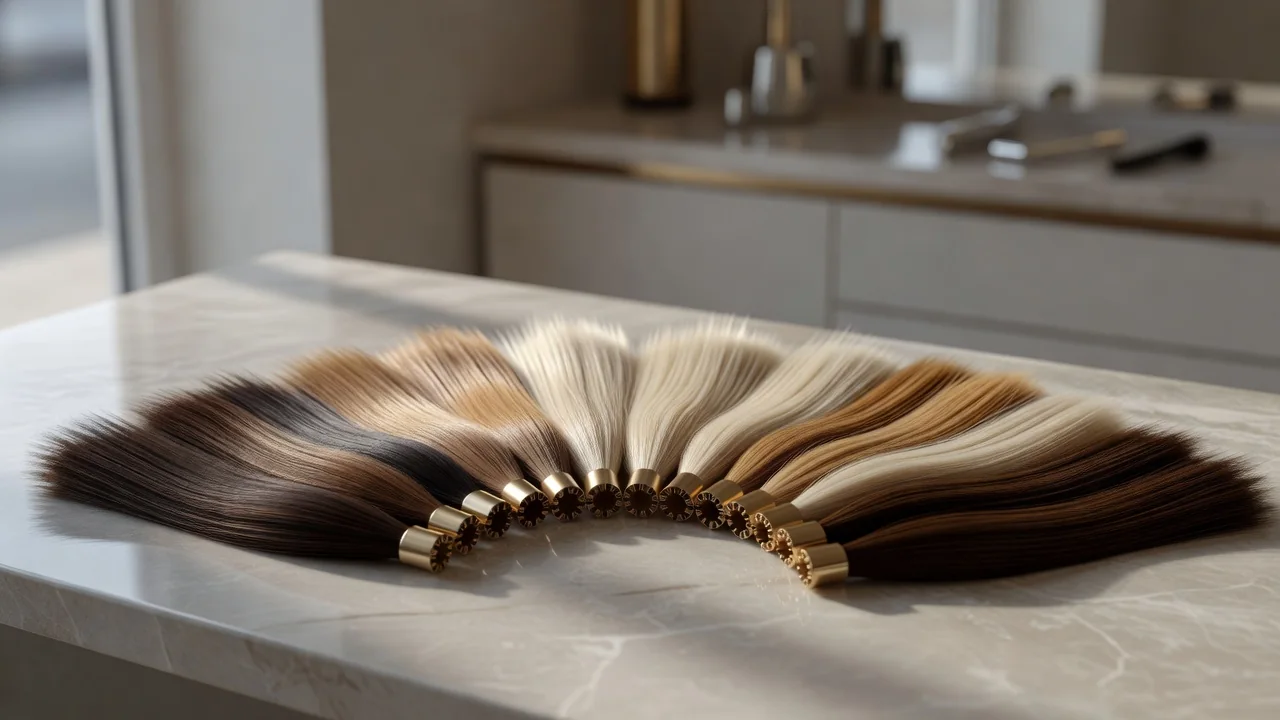
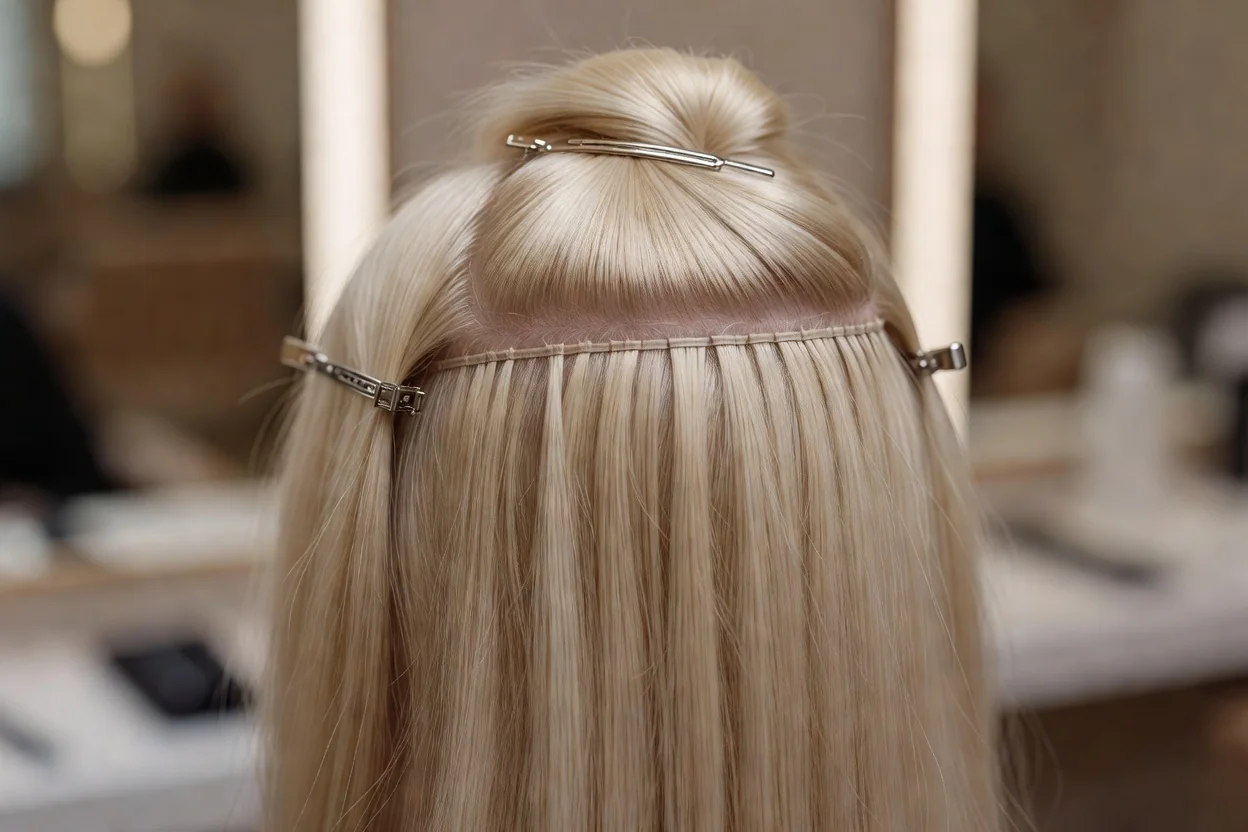
- Tape-in wefts: the default choice — the load spreads across a 4 cm section, application uses no heat, and removal is the gentlest of any semi-permanent method;
- Injection (invisible) tape: the upgrade for exposed zones, since the weft top imitates regrowth and stays hidden even in a side parting;
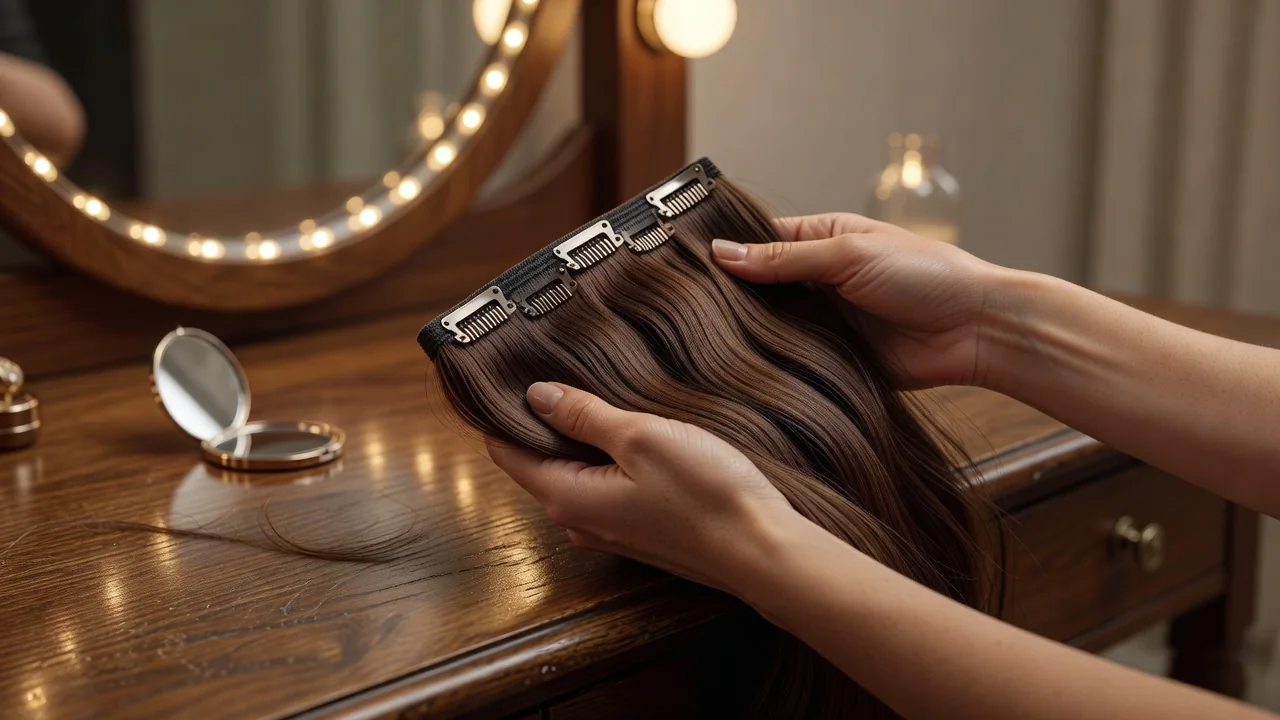
- Clip-ins: ideal as a trial and for occasions — zero root stress when removed nightly, but daily clipping on the same anchor points causes traction over months;
- Keratin bonds: only in micro-bond format on truly fine hair, and only from a stylist who has done them before — standard bonds concentrate too much weight per point;
- Sewn weaves and braided tracks: avoid — the foundation braid pulls on exactly the weak roots you are trying to protect.
The weight budget in numbers
| Hair situation | Max extension weight | Recommended length gain | Best method |
|---|---|---|---|
| Fine strands, normal density | 100–120 g | +10–15 cm | tape standard + injection top |
| Low density, visible parting | 60–80 g | volume only | injection tape |
| Postpartum regrowth phase | 40–60 g | fill sides/fringe | clip-ins or few tape pairs |
| Actively shedding | 0 g | — | treat the cause first |
The last row is not a joke. Extensions disguise thinning but accelerate active shedding: every gram is mechanical load on a follicle that is already letting go. A trichologist visit, ferritin and vitamin D bloodwork, and three months of patience beat any weft when hair is actively falling.
Placement rules that keep wefts invisible
On fine hair, the standard "row map" shrinks. Keep wefts out of the crown swirl, below the horseshoe line of the parting, and 2–3 cm back from the temples. Cut wefts to custom widths rather than forcing standard 4 cm bands into narrow zones. And accept a shorter result: an extra 10–15 cm of length reads natural on fine hair; an extra 25 cm advertises itself.
Maintenance for the fine-haired client
Brush morning and evening with a loop brush, holding the roots to kill tension. Shampoo sulfate-free, condition from mid-lengths down, and never apply oils or masks at the tape line — slippage on fine hair starts there. Book move-up appointments at 6 weeks rather than 8: fine hair grows out proportionally faster in visible terms, and a slipped weft shows immediately on hair that has nothing to hide it.