Standard vs Invisible Tape Wefts — and How Many You Actually Need
Among semi-permanent extension methods, tape-ins hold their popularity for three reasons: they are thin, they go in fast, and they are reusable. But "tape extensions" on a supplier's catalogue page actually covers two visibly different products — the standard weft with a visible adhesive band and the injection-style weft where hair appears to grow straight out of the tape. Choosing between them, and calculating how many wefts a head actually needs, is where most first-time buyers stumble.
Standard tape wefts: the workhorse
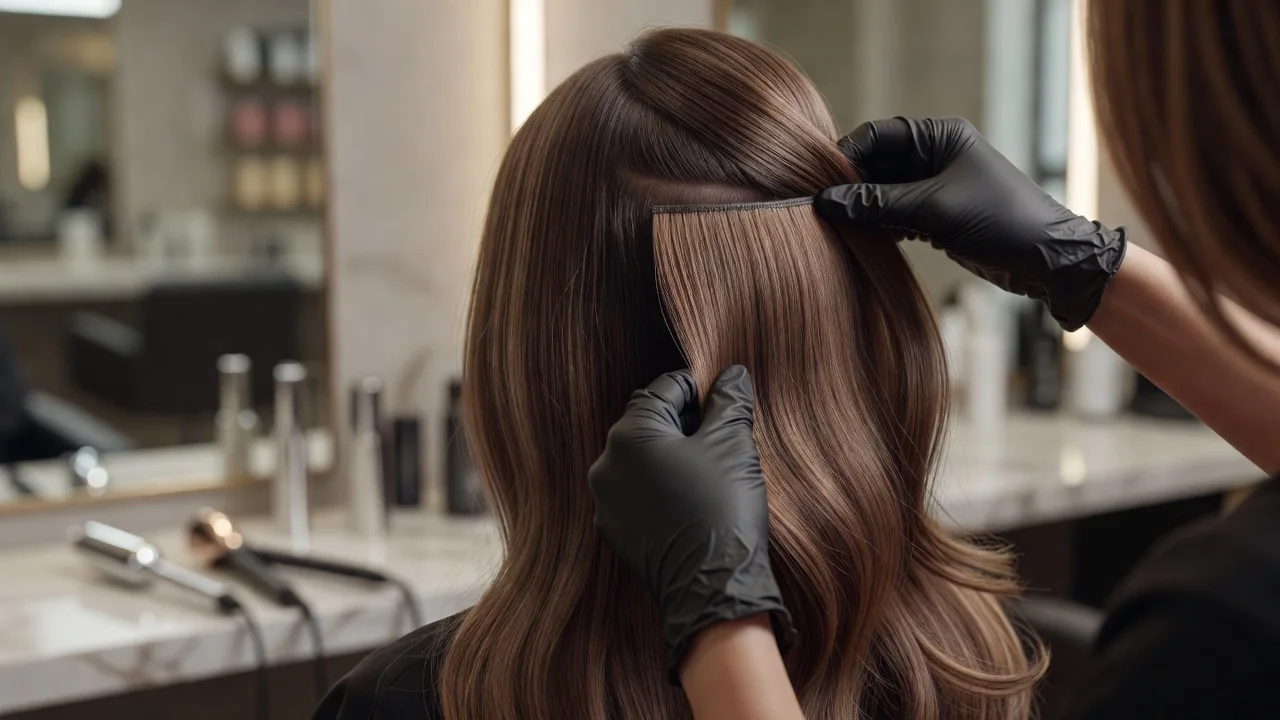
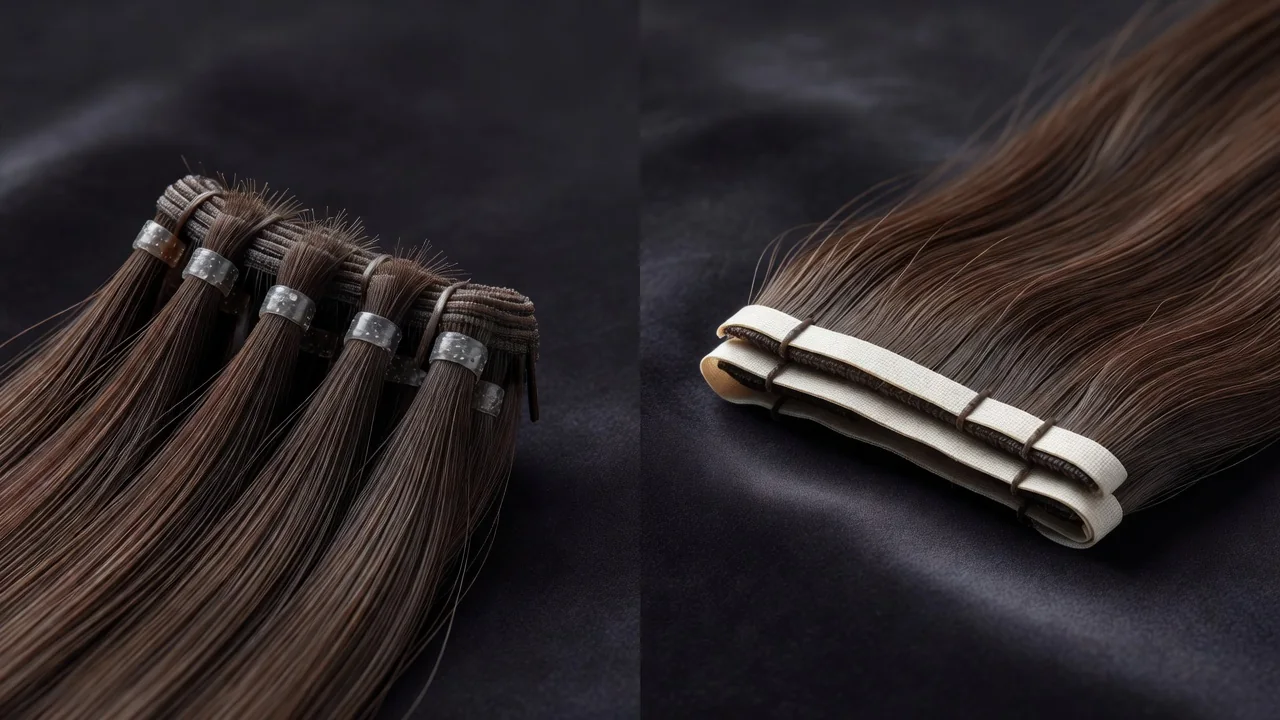
A standard tape weft is a 4 cm wide band of hair machine-stitched onto an adhesive strip. The band is flat and flexible, but at close range you can see where the hair meets the tape. On most of the head — the nape, the sides, anywhere covered by a layer of natural hair — that seam never shows. Standard wefts cost less per gram and remain the default for length and volume jobs.
Injection (invisible) tape: for the exposed zones
Injection tape wefts are built differently: each strand is inserted into the adhesive band one by one, so the top of the weft imitates natural regrowth. There is no visible seam even when you lift the hair. The trade-off is price — injection wefts typically run 30–50% more than standard ones — and slightly lower hair density per weft.
They earn their premium in exactly two situations: the temples and crown, where hair parts and can reveal a weft, and clients with fine or thinning hair, where every millimetre of camouflage matters. Many advanced lines now offer both constructions so salons can mix them in one installation.
The combined application
The professional trick is not choosing one type but stacking both. Since tape wefts are applied in pairs — one below the section, one above — you can put a standard weft underneath and an injection weft on top. The visible upper face mimics regrowth; the hidden lower face saves budget. The procedure looks like this:
- With the tail of the comb, isolate a fine section the same width as the weft — about 4 cm wide, 1 cm deep;
- Apply a standard tape weft below the section, keeping about 1 cm from the scalp and never touching the adhesive with fingers;
- Press an injection weft directly on top so both adhesive faces bond through the natural hair;
- Repeat across the top of the head; use standard-standard pairs for the covered lower zones.
How many wefts does a head need
The honest answer is a range, because head size, natural density and the target result all shift the count. As a working baseline for medium-density hair:
| Goal | Standard wefts | Injection wefts | Total weight |
|---|---|---|---|
| Thickness only, no length | 16–24 | 4–8 | 60–80 g |
| Length to shoulder blades | 32–40 | 8–12 | 100–120 g |
| Length + full volume | 44–56 | 12–16 | 140–180 g |
| Very thick natural hair | +20% on any row | same | up to 200 g |
Two rules of thumb protect the result. First, match the extension weight to what the natural roots can carry — fine hair overloaded with 180 grams will break at the tape line within a month. Second, order 10% extra wefts beyond the calculation: a colour mismatch or a dropped weft on application day is cheaper to cover from stock than from an emergency reorder.
Matching colour before you buy
Counting wefts is pointless if the shade is off. Order the supplier's physical colour ring rather than trusting screen photos, check the match in daylight near a window, and when in doubt go half a tone lighter — extensions read darker once they hang in a mass below the natural hair. A rooted or balayage blend forgives small mismatches far better than a flat single shade.