Tape-In Extensions: How to Apply, Remove and Reapply Them
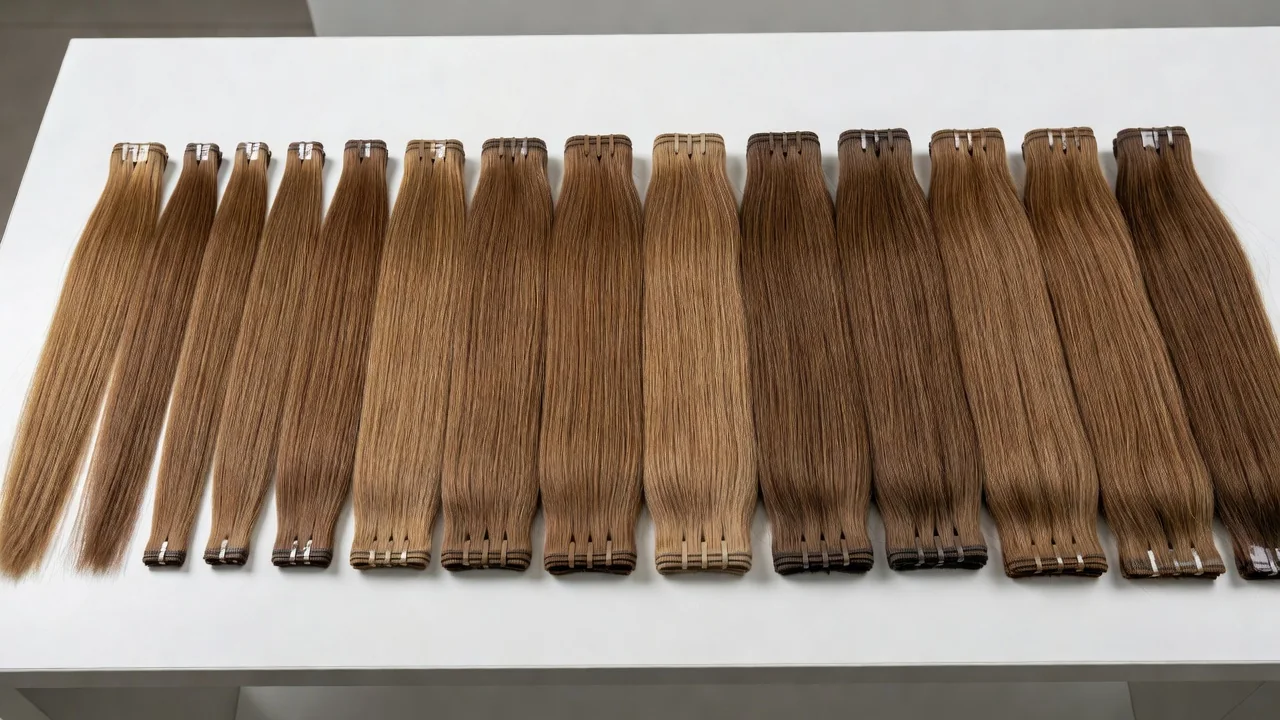
Tape-in extensions have overtaken keratin bonds as the most requested semi-permanent method in salons, and the reason is simple economics: the same hair can be removed, retaped and reinstalled for 12 to 18 months. A client pays for hair once and only pays for labour afterwards; the salon gets a loyal visitor every 6–8 weeks. But that reuse cycle only works when application, removal and reapplication are done by the book.
This guide walks through the full loop the way working stylists do it: prep, placement, clean removal and retaping. It assumes Remy hair with intact cuticles — non-Remy hair dries out and becomes unusable after a few weeks, and no technique will save it.
Preparation: the step everyone wants to skip
Wash the client's hair with a clarifying shampoo and no balm. If conditioner is unavoidable, keep it strictly on the last five centimetres of the ends — any slip agent near the roots will weaken the adhesive bond within days. Blow-dry completely and, ideally, run a flat iron through the hair so you can see its natural fall before sectioning.
Never apply tape wefts to damp hair. Moisture trapped under the tape breaks down the adhesive and can irritate the scalp. The hair must be bone dry, free of styling products, oils and dry shampoo residue.
Application: the sandwich method
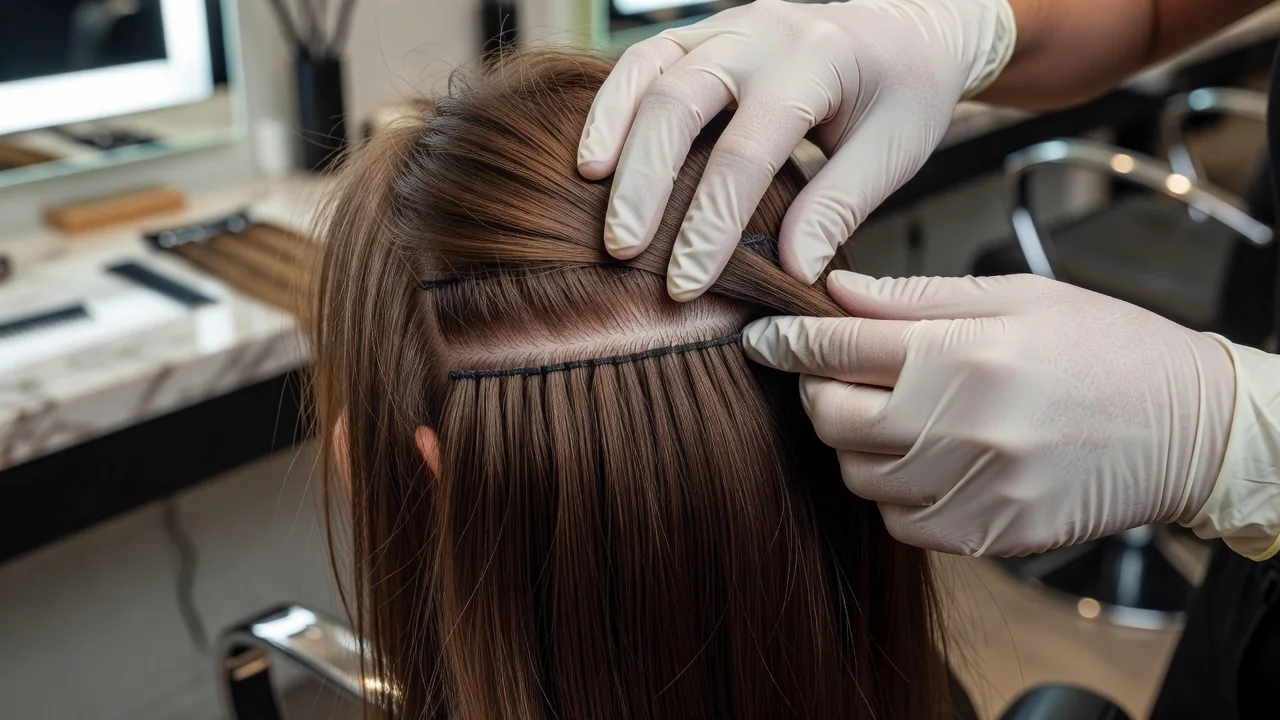
Work from the nape upward in horizontal sections about 1 cm thick — roughly the width of the weft itself. Place the first tape weft under the section, about 1 cm away from the scalp, without touching the adhesive with your fingers. Lift the section, press a second weft directly on top so the two adhesive faces meet with the natural hair sandwiched between them, and press firmly along the full width.
- Keep at least 1 cm of distance from the scalp — closer means tension and traction breakage;
- Stay 2–3 cm away from the hairline and parting so wefts stay invisible in a ponytail;
- A fine, precise section matters more than speed: a thick slice of natural hair inside the sandwich slips out within weeks;
- Full volume usually takes 40–60 wefts; thickening without length can be done with 20–30.
Removal at 6–8 weeks
After two to three months — the exact timing depends on how fast the client's hair grows — the wefts have travelled down with the roots and need to come out. Before touching anything, sketch a quick placement map: photograph or diagram where each weft sits. When you reapply, you will thank yourself for knowing the original layout.
Spray an alcohol- or oil-based tape remover along the adhesive seam, let it soak for 30–60 seconds, then peel the two wefts apart gently. Pull any glue residue off the natural hair with a fine tail comb and more remover; never rip or scrape dry adhesive. Wash the client's hair again before reinstallation.
Retaping and reapplication
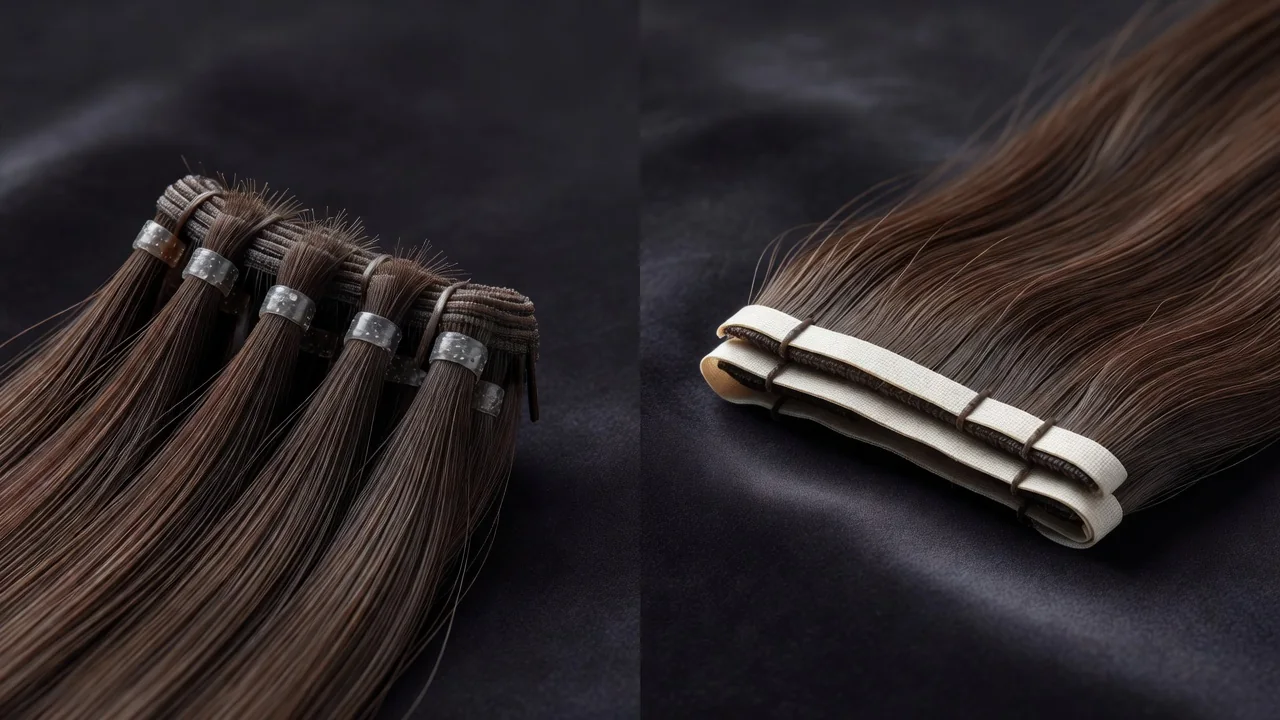
Peel the spent tape off each weft, wash the wefts themselves in diluted shampoo, dry them flat and press on fresh replacement tape strips. Then repeat the original application, working off your placement map. The whole removal-plus-reinstall visit runs 60–90 minutes for a full head — far faster than a keratin session of three to four hours.
| Stage | Time | Key product | Common mistake |
|---|---|---|---|
| Prep wash | 15 min | clarifying shampoo | conditioner near roots |
| First application | 45–60 min | tape wefts, tail comb | sections too thick |
| Removal | 20–30 min | tape remover spray | pulling dry adhesive |
| Retape + reinstall | 60–90 min | replacement tape strips | skipping weft wash |
How long the cycle lasts
With quality Remy hair and proper home care — sulfate-free shampoo, brush with loop bristles, no oils on the tape line — a set survives 6 to 9 removal cycles before the hair itself is worn out. That is where the 12–18 month figure comes from. The tape is consumable; the hair is the investment, and the method treats it accordingly.